

Winning the first order is only the beginning. A customer's true value emerges when they come back for more. Customers who buy regularly are the foundation of a stable e-commerce business, and artificial intelligence makes it possible to predict who is most likely to buy again - and when.
Table of contents
- 01 What does the repeat-purchases scenario deliver?
- 02 How can AI and automation help?
- 03 What are the potential applications of such predictions?
- 04 What tips will boost effectiveness?
- 05 Summary
01 What does the repeat-purchases scenario deliver?
The scenario identifies first-time buyers who are likely to buy more often and to whom you can direct advertising. With precisely targeted messages, you can increase sales and customer loyalty.
This scenario contributes to:
- increasing purchase frequency;
- growing LTV;
- growing revenue;
- improving the repeat purchase rate.
Repeat customer purchases are one of the most important topics in retail and e-commerce. It is precisely the customers who buy regularly who form the backbone of a stable business. That's why it's worth using artificial intelligence to predict and increase the number of repeat purchases.
02 How can AI and automation help?
There are various ways to use artificial intelligence (AI) to analyze customer purchasing behavior and predict their future purchases. One of the most popular tools is predictions, which analyze various customer purchase data such as their purchase history, preferences and behavior.
AI algorithms can also be used to predict the time at which a given customer will make their next purchase. This makes it possible to plan an appropriate marketing campaign or promotion, aimed at the right customer at the right time.
Artificial intelligence can also help increase basket value - that is, the number of products customers buy at once. AI algorithms analyze data on purchase history, preferences and customer behavior, and on that basis suggest additional products or accessories.
03 What are the potential applications of such predictions?
Example 1: A customer who regularly buys coffee in an online store is highly likely to purchase a coffee machine, a milk frother or other coffee-related accessories in the future.
Example 2: A customer who has repeatedly bought workout clothing is more likely to be interested in the future in buying additional exercise equipment, supplements or gym memberships.
Example 3: A company selling cosmetic products that uses artificial intelligence to analyze customer reviews and opinions in order to identify common complaints about a specific product.
04 What tips will boost effectiveness?
- Analyze when customers most often return to your store and set a cutoff date from the first purchase by which a customer should visit the store again.
- Understand your customers' category preferences. Use recommendations to help you pinpoint exactly which group of people is interested in a particular product category.
- Test sending sales emails featuring complementary products.
- Test different customer engagement tactics. Offer free shipping, an anniversary coupon or an invitation to a special event reserved for customers who have already been with you for a year.
- Try different communication channels. If you see that email doesn't appeal to everyone, let some customers know about a special surprise via SMS or web push.
- Add a block of recommended products based on your customers' preferences and their purchase history.
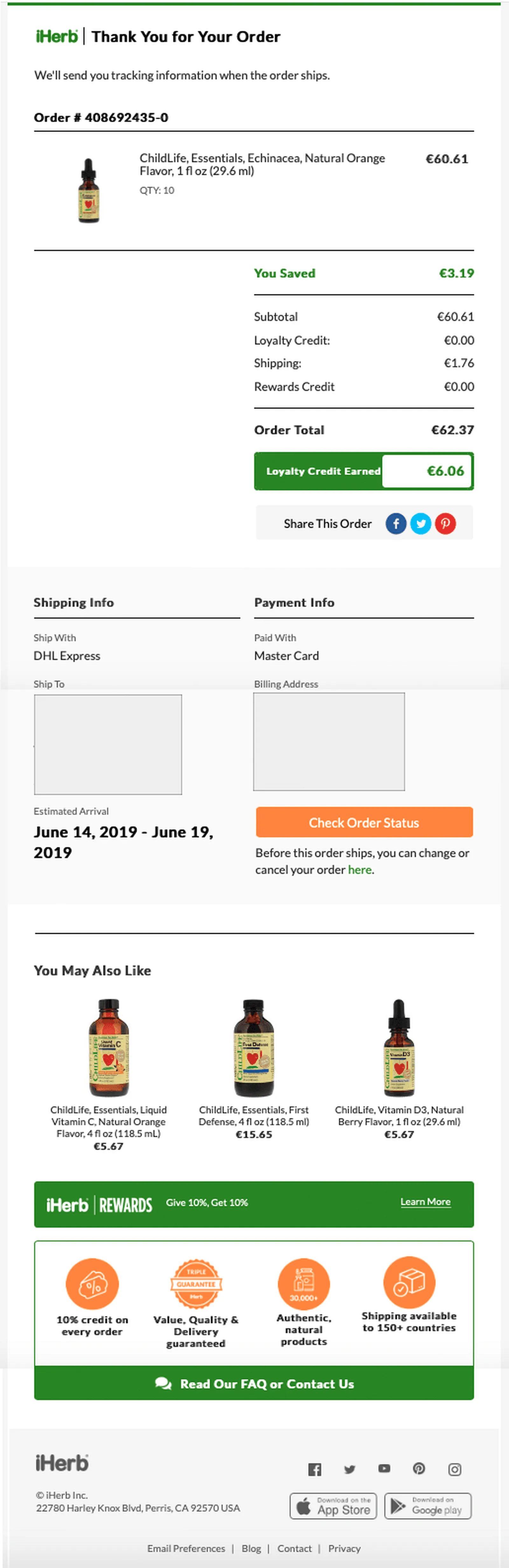
The company iHerb has an interesting way of encouraging customers to make their next purchase after the first one. In the order summary, it adds complementary recommendations that are consistent with the customer's previous purchase.
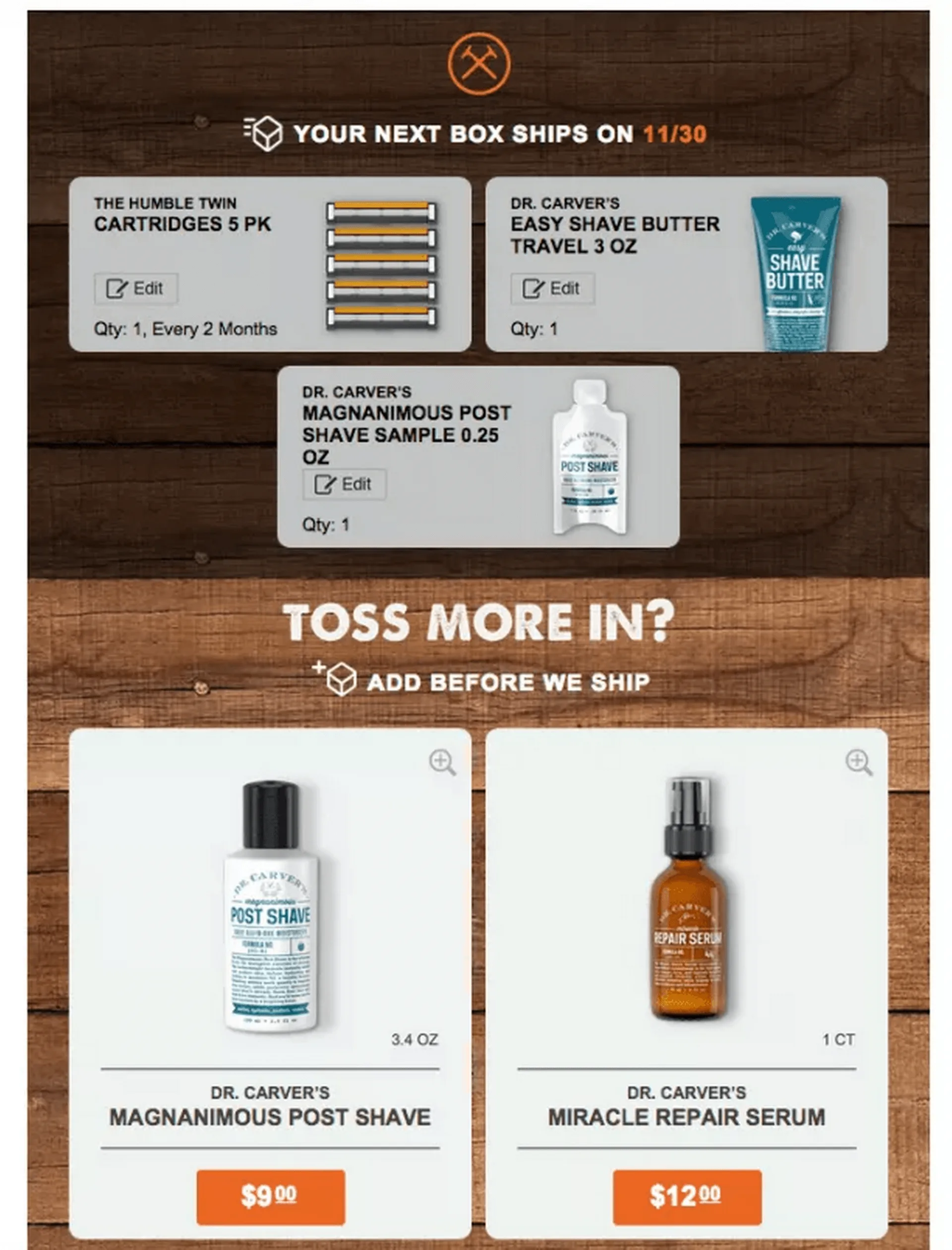
The D2C brand Shave Club adds a message before shipping, letting customers know it's not too late to order complementary products that can still be added to the current parcel.
05 Summary
Repeat purchases are the foundation of a stable e-commerce business - it's loyal customers who drive LTV and predictable revenue. Artificial intelligence makes it possible to predict who is most likely to buy again, and when, so you can reach them with the right offer at the perfect moment. Use accurate recommendations, complementary products and well-chosen communication channels, and keep testing different engagement tactics.