

Grocery products play by their own rules: customers come back for them far more often than for apparel and footwear, electronics, or home goods. This high purchase frequency is a huge opportunity - provided you truly understand what your customers really need.
Table of contents
- 01 How to recognize customer needs in e-commerce?
- 02 Customer needs analysis - what is it?
- 03 What are customers' preferences and needs in the grocery category?
- 04 How to survey customer needs in grocery e-commerce?
- 05 How to use a culinary quiz to research preferences?
- 06 Why is it important to understand customer needs in grocery e-commerce?
- 07 What benefits does customer needs analysis bring?
- 08 Summary
01 How to recognize customer needs in e-commerce?
There are several proven ways to analyze customer needs in grocery e-commerce.
To gather information about a user's purchasing needs, you can draw on:
- Purchase history
- The phrases users type into your on-site search
- Reviews and opinions left by users in the online store and on social media
By analyzing a user's purchase history, search results, opinions, and reviews, you'll learn what kind of products the user buys most often, how frequently they buy them, which brands they prefer, and how they rate particular products. This data can help you create personalized shopping experiences and prepare relevant product recommendations.
02 Customer needs analysis - what is it?
Customer needs analysis is a process in which a company examines what its customers' requirements, expectations, and preferences are. The goal is to understand what the customer needs or wants from a product or service. This can include demographic research, understanding the customer's lifestyle, their interests, or their buying behaviors. A company can use various methods, such as surveys, interviews, or data analysis. The results of customer needs analysis help a company better tailor its offer to customers' needs.
03 What are customers' preferences and needs in the grocery category?
Remember to analyze customers' needs in the grocery category across many dimensions:
- Fresh products (health): Many users prefer to buy fresh products that are in season and come from local sources.
- Organic products (health): Some users prefer to buy organic products to avoid pesticides and other chemicals.
- Diet products (health): Users with specific dietary restrictions or preferences may look for products that are gluten-free, vegan, or keto-friendly.
- Low-cost products (price): Many users are price-sensitive and look for deals, discounts, and promotions.
- Packaged products (convenience): Some users prefer to buy packaged or pre-cut products.
- Familiar products (brand loyalty): Some users may be attached to a brand.
- Sustainable products (sustainability): Some users look for products with eco-friendly packaging.
If you tag all of your products with the categories listed above, you'll be able to easily implement user segmentation and select recommendations appropriately. Purchase history and browsing history are the best data on which to build segmentation.
04 How to survey customer needs in grocery e-commerce?
Start by checking how frequently the users of your e-commerce shop. You can assess this based on purchase history, and you can ask new users in a survey:
How often do you shop for groceries online? (Daily / Weekly / Monthly / Rarely / Never)
You can base your understanding of grocery preferences on questions such as:
- What are your favorite flavors and ingredients?
- Are there any ingredients or products you avoid?
- Do you follow any particular diet?
- What kind of cuisine are you looking for?
- Are you looking for vegetarian or non-vegetarian options?
- Do you have any dietary restrictions or allergies we should know about?
- Are you looking for organic or locally sourced ingredients?
- Do you prefer spicy or mild dishes?
- Do you prefer home-cooked food or restaurant-prepared meals?
- Are you looking for traditional dishes or fusion?
05 How to use a culinary quiz to research preferences?
You can also place a culinary quiz in your online store to learn about your users' culinary tastes. Reward users for taking part, for example with a discount code.
06 Why is it important to understand customer needs in grocery e-commerce?
Understanding customer needs in the grocery business is crucial to achieving success and strong sales results. Customers are looking for easy, fast, and effective ways to buy food. When a company understands these expectations, it can deliver the right services. Knowing customer needs allows a company to tailor its offers better. This makes it easier for customers to find the products they truly want to buy. It increases customer satisfaction and loyalty toward the brand. This can lead to more frequent purchases. On top of that, a company that knows its customers' needs can better anticipate buying trends.
07 What benefits does customer needs analysis bring?
Customer needs analysis is a key element of running an effective business. This method enables a better understanding of customers' needs, expectations, and preferences. A properly conducted customer needs analysis can bring many benefits, including increased customer loyalty, an improved company reputation, and higher sales and profits.
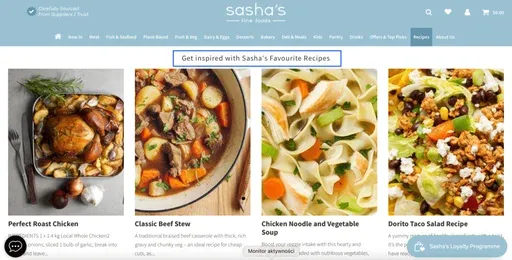
In addition to surveys, you can place a dedicated area with culinary recipes in your e-commerce. A user's recipe-browsing history will show you their culinary preferences and let you recommend products that make up the recipe the user is viewing.
08 Summary
Grocery e-commerce is an industry of exceptionally loyal, returning customers - which is why understanding their needs translates directly into sales. Combine the data you already have (purchase history, search phrases, reviews) with actively asking customers directly through surveys and culinary quizzes. The more precisely you learn your customers' taste, dietary, and price preferences, the more accurately you'll tailor your offer and recommendations.