AI Search

AI search that sells.

Turn the search box into the most effective sales channel in your e-commerce. A semantic search engine with real-time personalization - it understands customer intent, not just keywords.

A well-optimized search engine can account for an average of 20% of total e-commerce revenue40% to 60% of mobile users start their visit with search75% of users expect personalized experiences
Starting point

Why isn't a regular search engine enough?

A search engine powered by AI works like an experienced in-store salesperson. It understands the customer's needs and suggests the most relevant results so the customer finds the product they are looking for. Its suggestions take into account purchase history, the product catalog and many variables responsible for personalizing results.

A well-optimized e-commerce search engine can account for an average of 20% of total revenue. Depending on the segment, this ranges from 8% to 43%.

40% to 60% of users visiting your store on mobile devices start their visit by using search.

75% of users expect personalized experiences on the site. If you do not provide them, there is a high probability they will leave.

01

Typo correction and synonyms

The search engine automatically corrects typos and recognizes synonyms, so it returns relevant results even for imprecise or misspelled queries.

The user finds the product faster without having to fix their query. For the store, this means a lower abandonment rate - as many as 30% of visitors leave an online store when search returns no results.

Business value: abandonment reduction by up to 30%, more completed shopping sessions, less traffic lost on faulty queries

02

Autocomplete

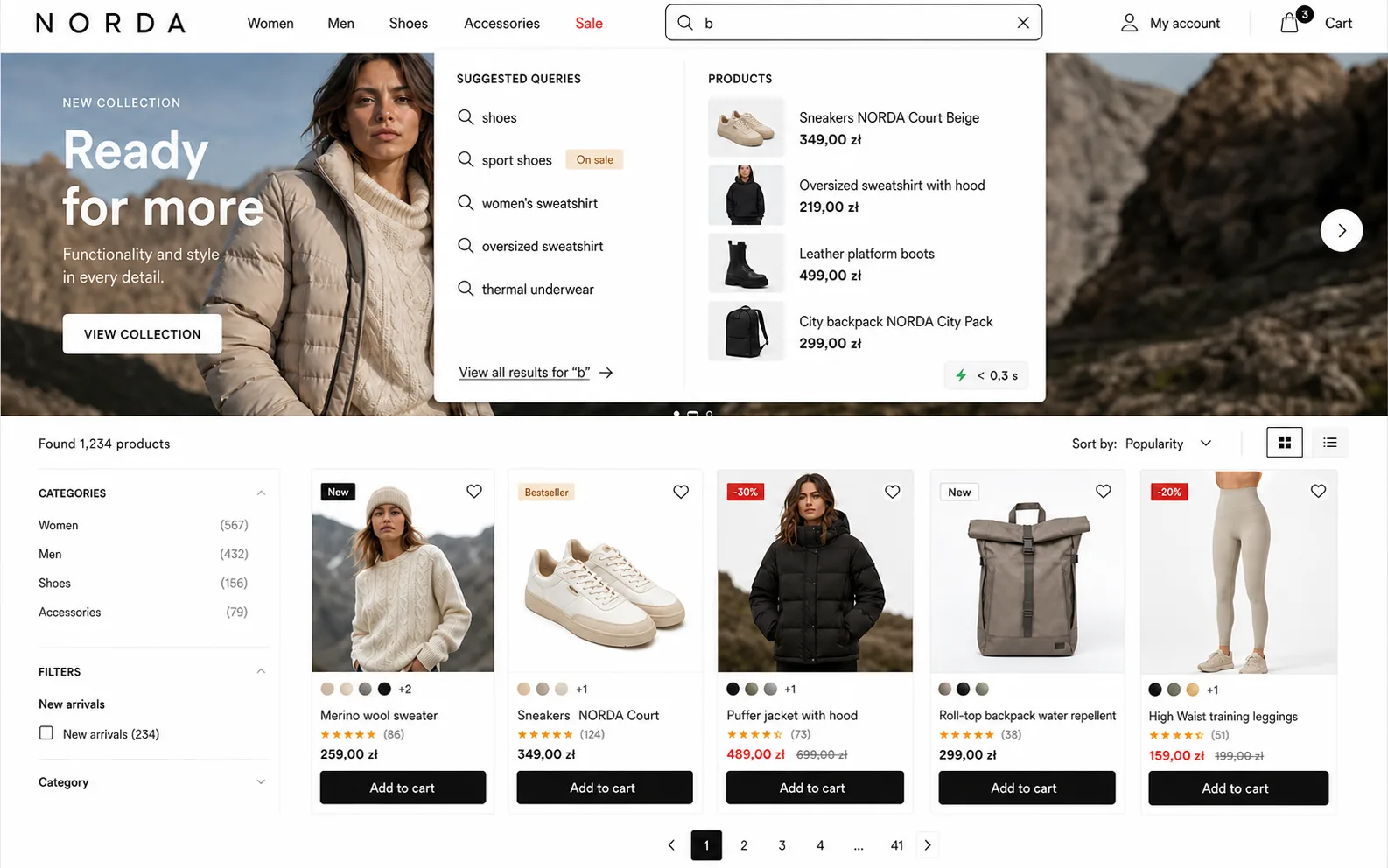
The search engine shows suggested phrases and products as soon as the first character is typed - in under 0.3 seconds.

Suggestions are based on search popularity and the effectiveness of the results they generate, so the user reaches the desired product faster. The store gains control: it can define lists of promoted phrases according to sales goals and block expressions that should not appear in suggestions.

Business value: shorter path to product, higher conversion from the search box, steering sales through promoted phrases

03

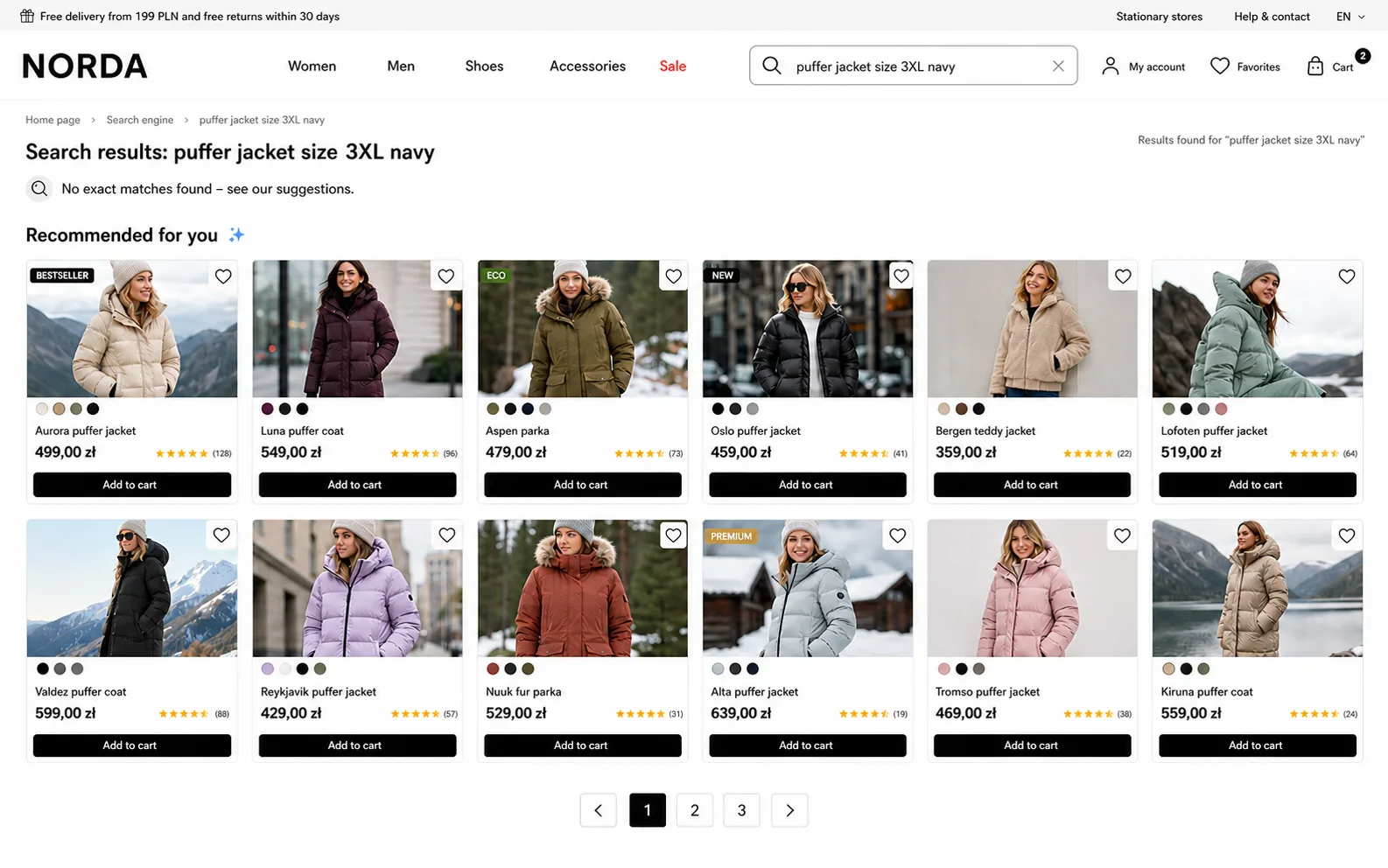
No search results

The search engine searches not only the name and brand, but also color, attributes, categories and the full product description, significantly increasing the chance of a relevant result.

If the system still finds no match, it presents products recommended based on the user's behavioral model - instead of an empty page, the customer sees suggestions. In an optimized store, the average share of no-result searches drops from 13% to 1-5%.

Business value: no-result searches down from 13% to 1-5%, sessions rescued with recommendations, more converting traffic

04

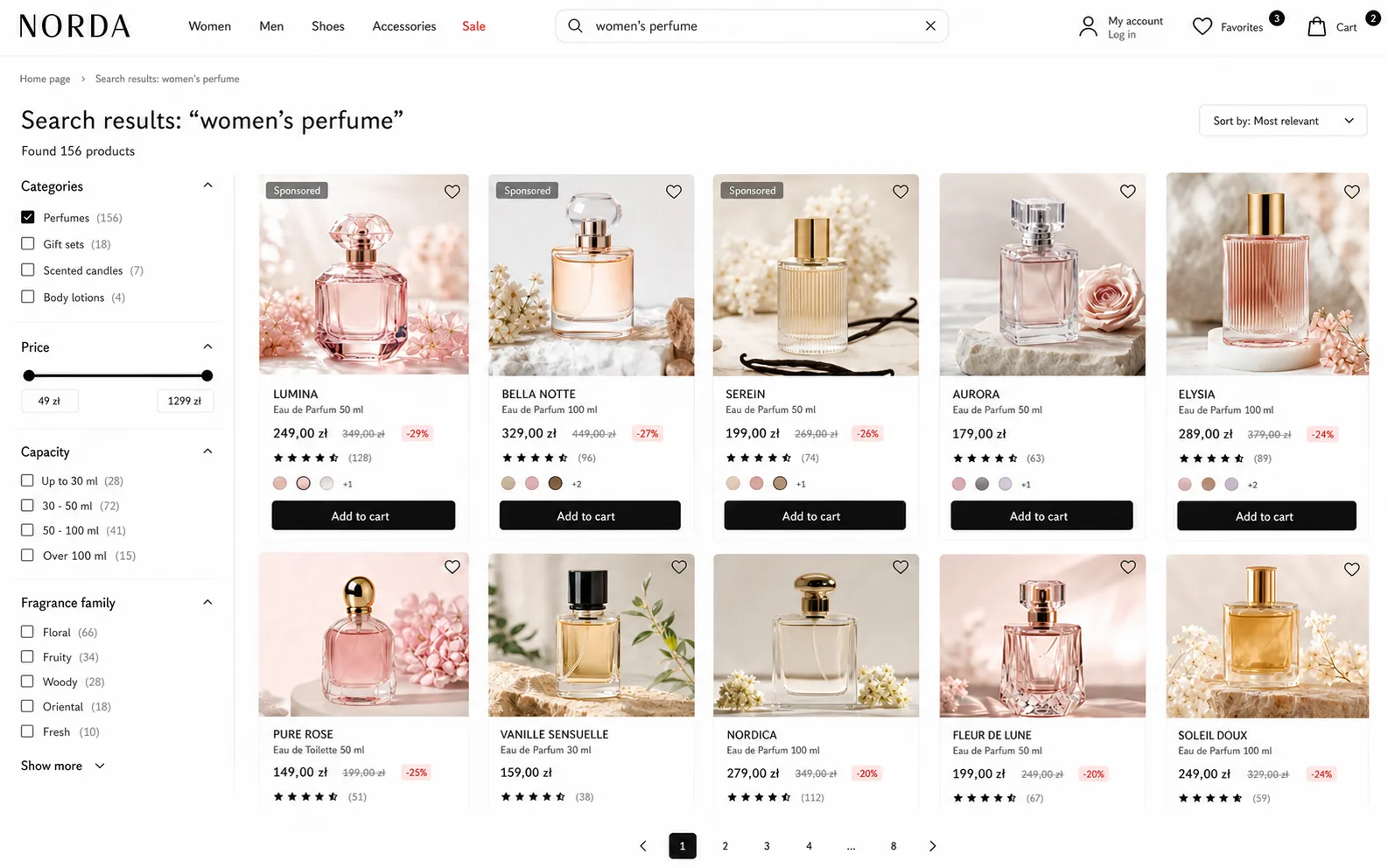
Search monetization

The search engine enables controlled positioning of trading partners' products in the top result spots - similar to the retail media model.

The user still receives relevant results, while the store generates an additional revenue stream from sponsored fees. It is a chance to monetize the most valuable space in the online store without building a separate advertising platform.

Business value: new revenue stream from sponsored fees, higher margin on search traffic, monetization without a separate ad-tech platform

05

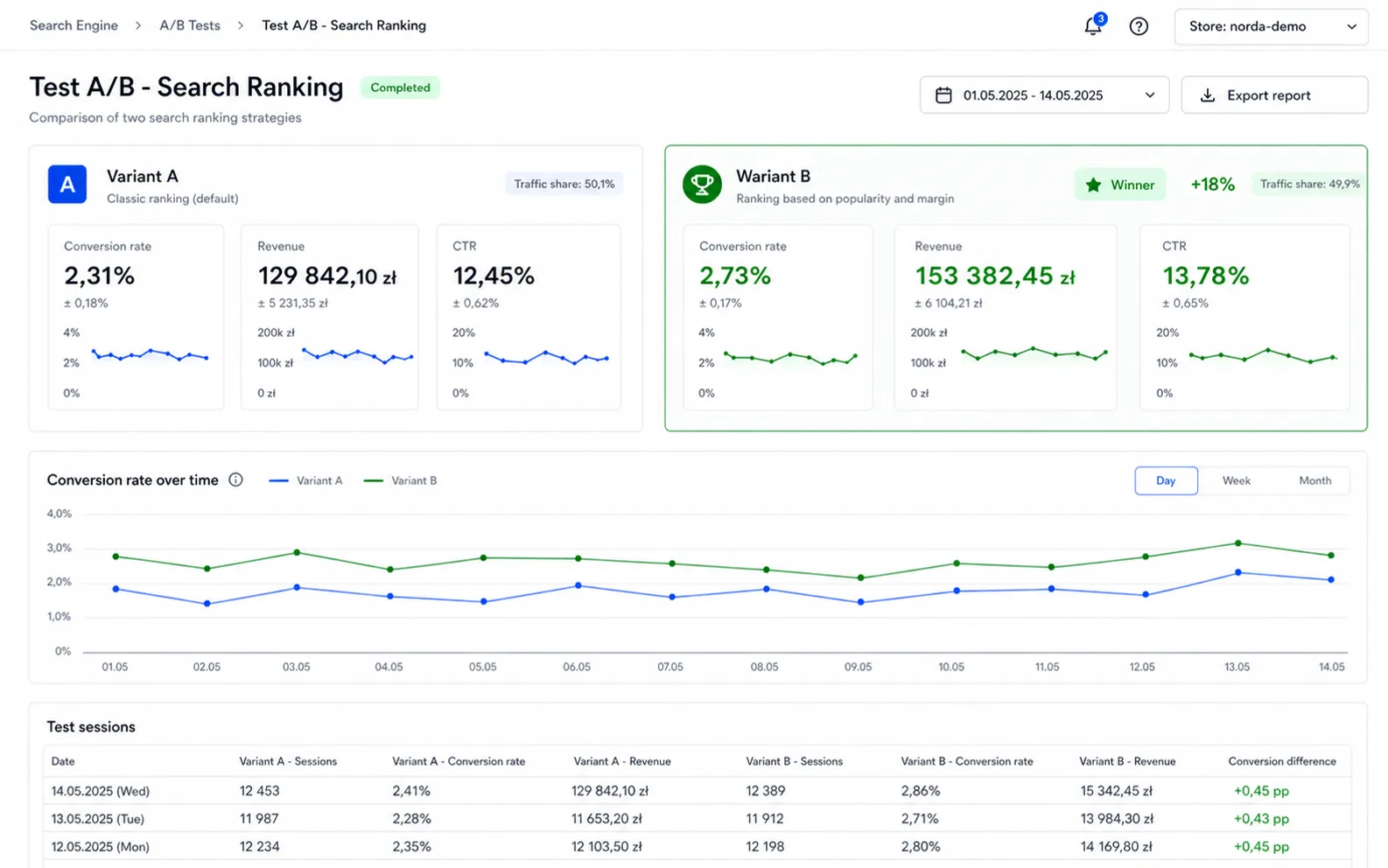
A/B testing

The search engine lets you run A/B tests of different configurations - ranking algorithms, promotion rules, sorting - and compare their impact on conversion, revenue and CTR.

You base decisions on data rather than intuition, gradually tuning search to your assortment and customers. According to Monetate research, optimization through A/B testing can lift conversion by up to 50%.

Business value: conversion lift of up to 50% (Monetate research), data-driven decisions instead of intuition, continuous revenue optimization

06

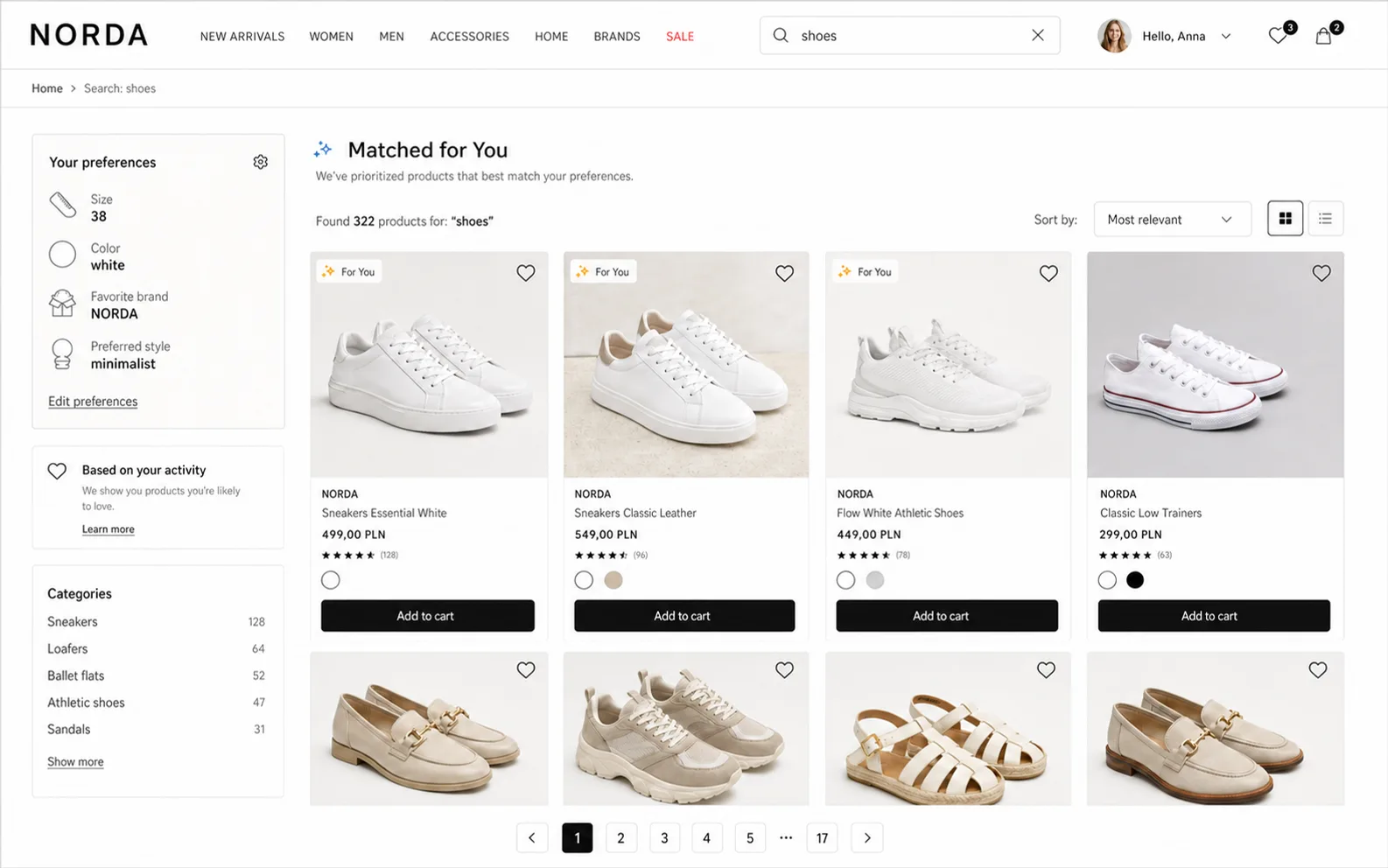
Results personalization

The search engine analyzes the behavior, purchase history and preferences of each user to show the products best matched to their needs in the top positions.

The customer reaches what they are looking for faster and feels that the store understands them. For the store, this means higher conversion, a larger basket and a better shopping experience - 75% of users today expect personalized experiences.

Business value: higher conversion and basket value (AOV), greater customer loyalty, meeting the expectations of 75% of shoppers

07

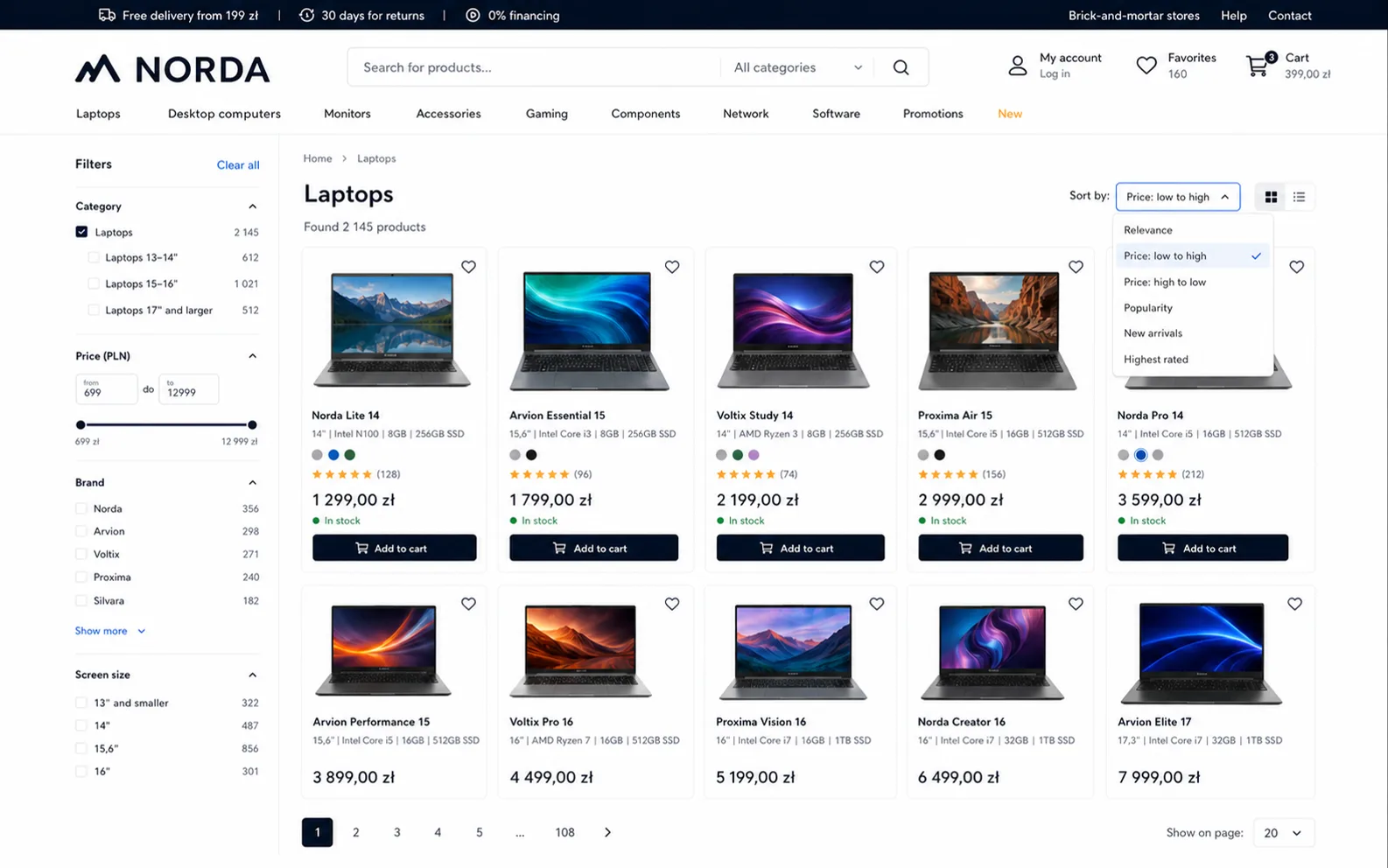
Attribute filtering

Users can narrow results by any product attribute - brand, color, size, price, availability or custom catalog characteristics.

Filters let them quickly reach products meeting specific criteria instead of browsing a long list of results. This shortens the purchase path, reduces session abandonment and translates directly into higher conversion.

Business value: shorter purchase path, fewer abandoned sessions, higher conversion on long result lists

08

Results sorting

The search engine dynamically changes the order of presented products in response to user preferences - no items disappear, but the most relevant ones rise to the very top of the list.

The customer gets what interests them most without having to scroll. For the store, this means higher CTR on top positions and a greater chance of selling popular or strategic products.

Business value: higher CTR on top positions, more sales of strategic products, less scrolling = a faster decision

09

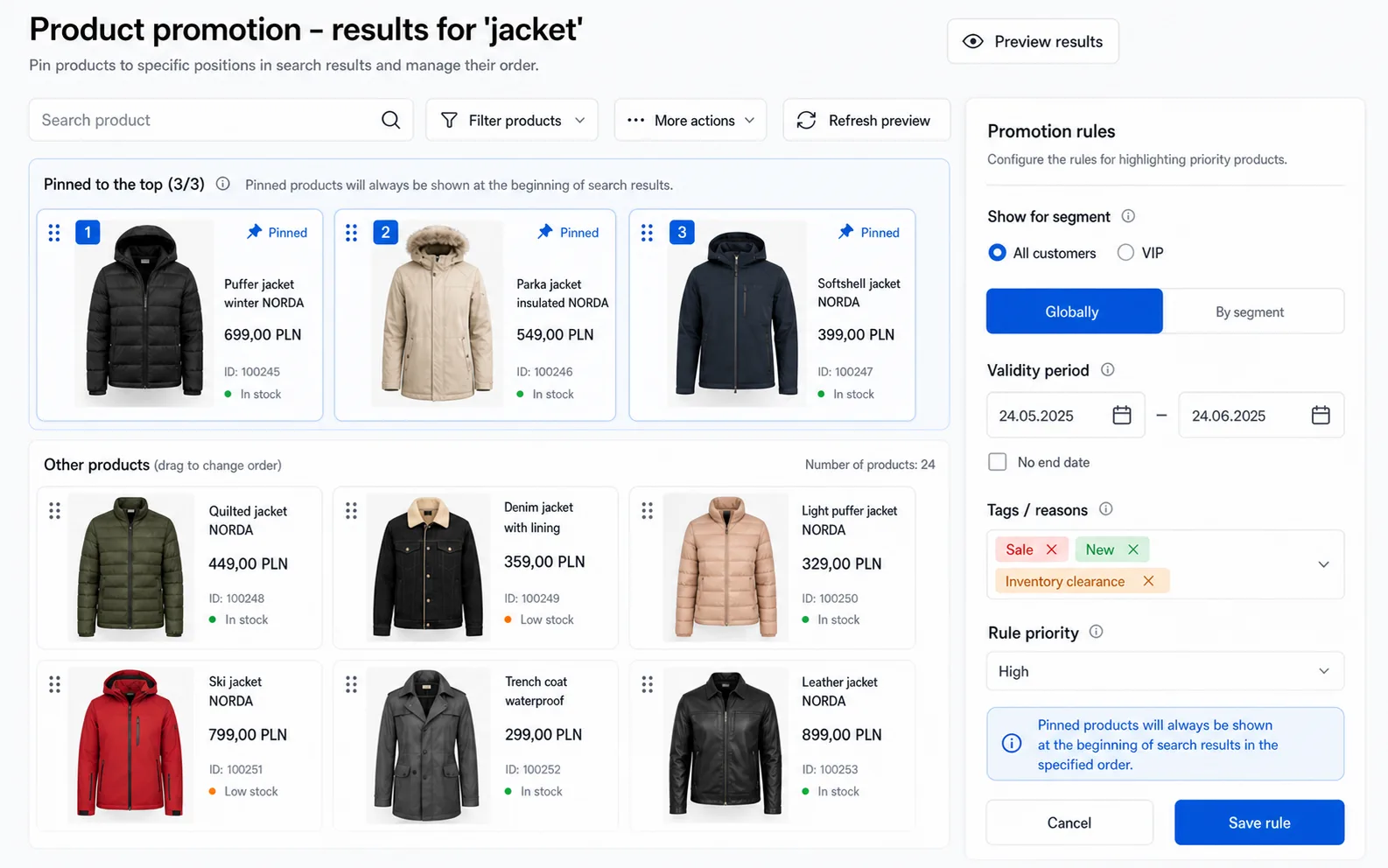
Product promotion

Without a developer's help, you can position any product at the top of results - globally or for selected customer segments.

This marketing tool lets you react quickly to promotions, seasonal sales, new arrivals or excess stock, matching the display to current sales goals. The customer sees products more accurately matched to their group, and the store can steer the visibility of its assortment in real time.

Business value: quick reaction to promotions and seasons without IT work, clearing excess stock, steering exposure in real time

10

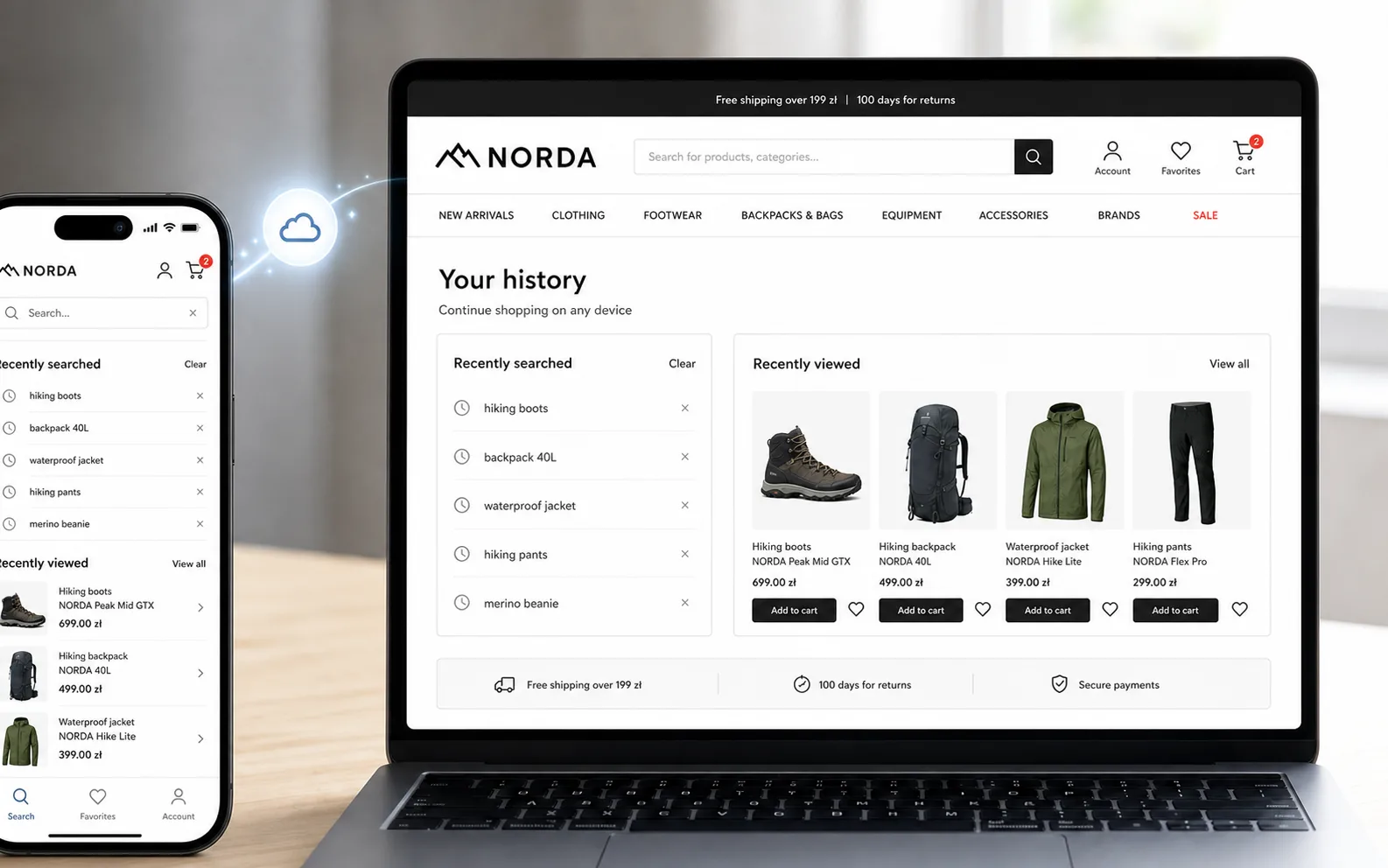
Cross-device search history

The search engine synchronizes the history of queries and recently viewed products across devices - computer, smartphone and tablet.

A customer can start searching on their phone on the way to work and effortlessly finish the purchase in the evening on a laptop. For the store, this means more completed conversions in multichannel purchase paths and a lower risk of losing the customer between sessions.

Business value: more completed conversions in multichannel paths, less customer loss between sessions, a better omnichannel experience

11

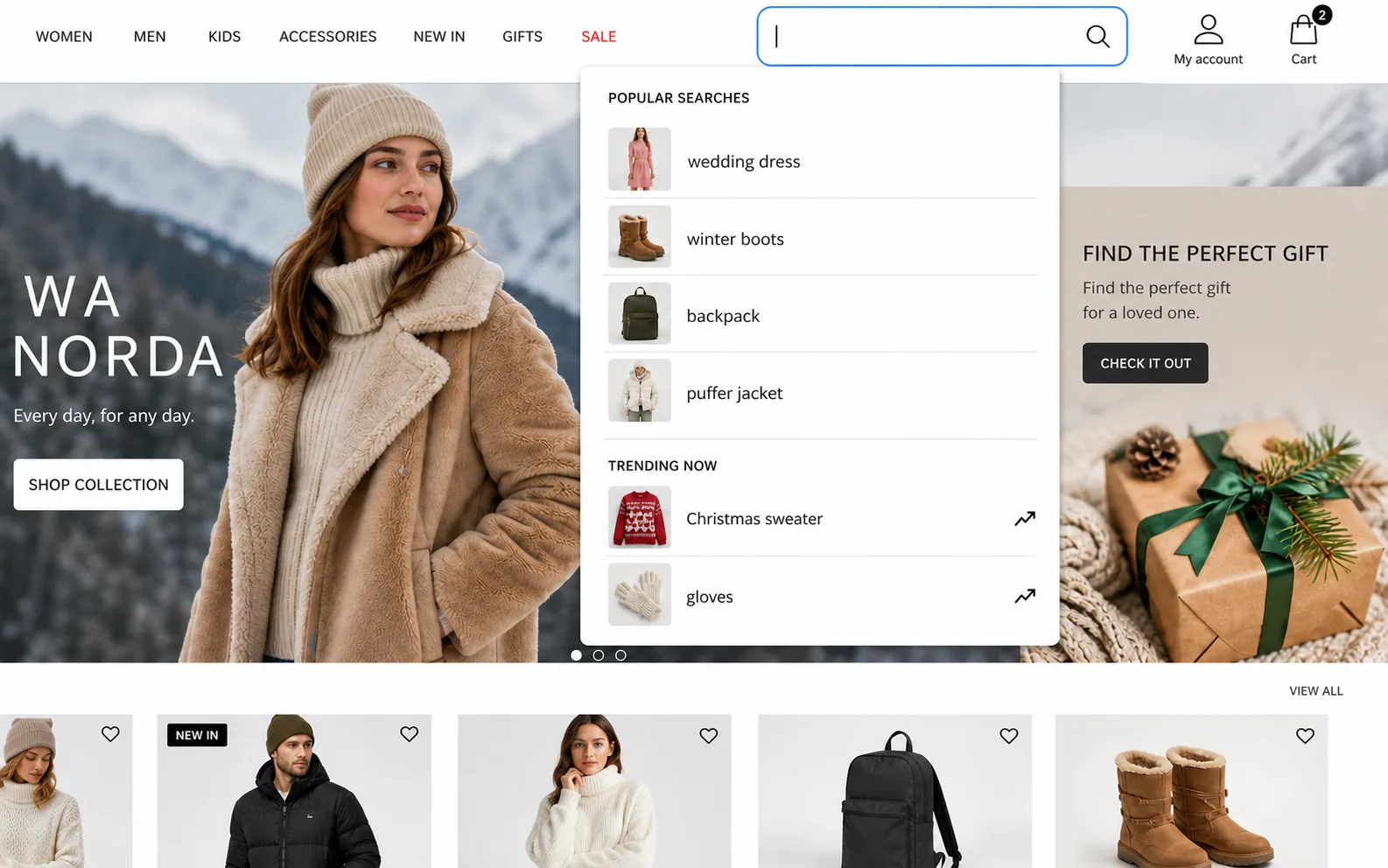
Popular phrase suggestions

The search engine shows the statistically most-searched phrases in the store as well as those gaining popularity in real time.

A customer who does not yet know exactly what they are looking for gets inspiration right after clicking the search box. This lets the store strengthen bestseller sales, showcase seasonal trends and speed up the discovery of newly introduced assortment.

Business value: stronger bestseller sales, faster discovery of new arrivals, monetization of seasonal trends

12

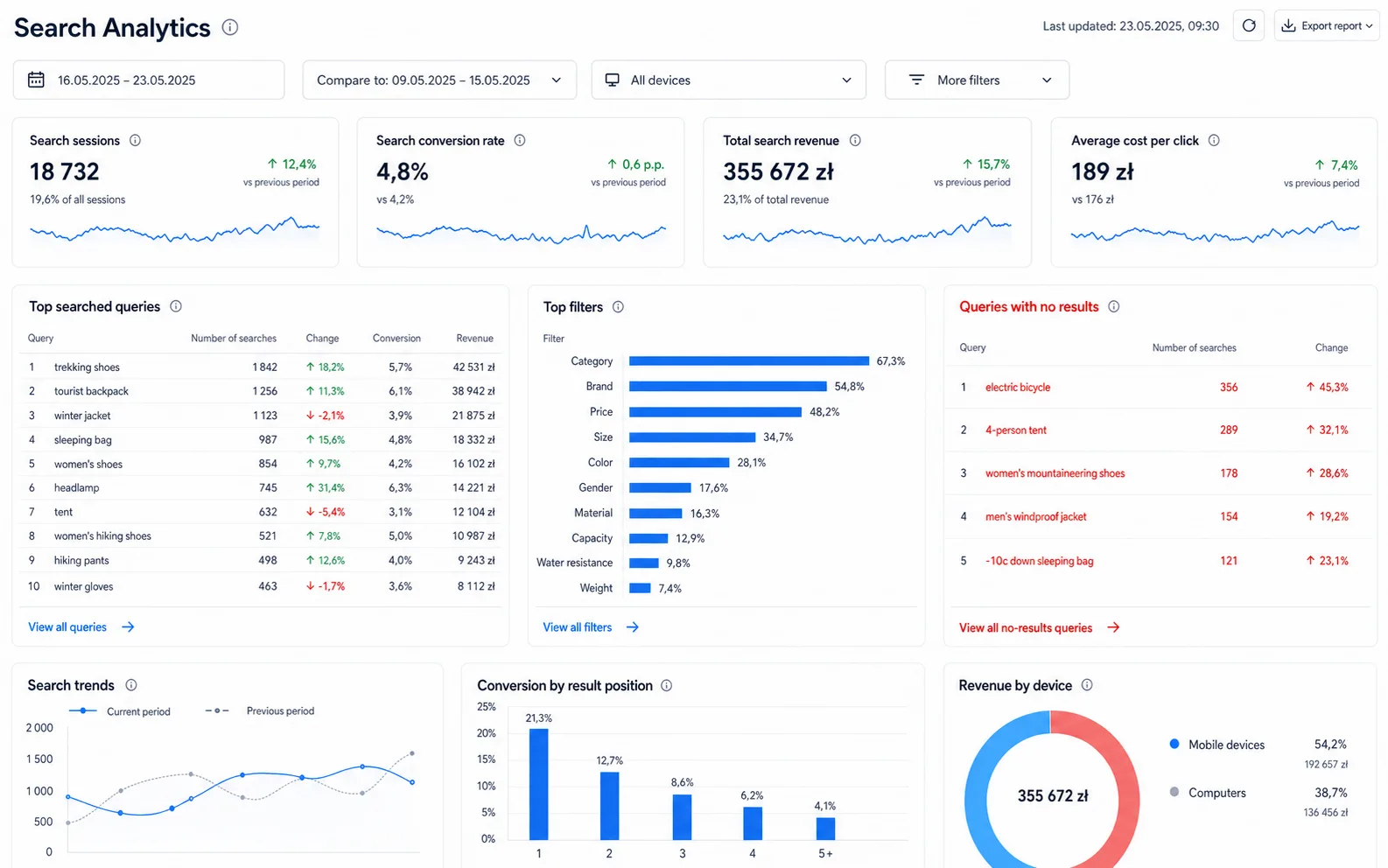
Analytics

The analytics module presents the most-searched phrases, the most popular filters, no-result queries and search conversion metrics.

This gives the store team insight into customers' real needs - what they look for, what they cannot find and what is missing from the offer. On this basis you can expand the assortment, tune search and make merchandising decisions grounded in hard data.

Business value: data-driven merchandising decisions, identifying gaps in the assortment, lower risk of wrong stock purchases

13

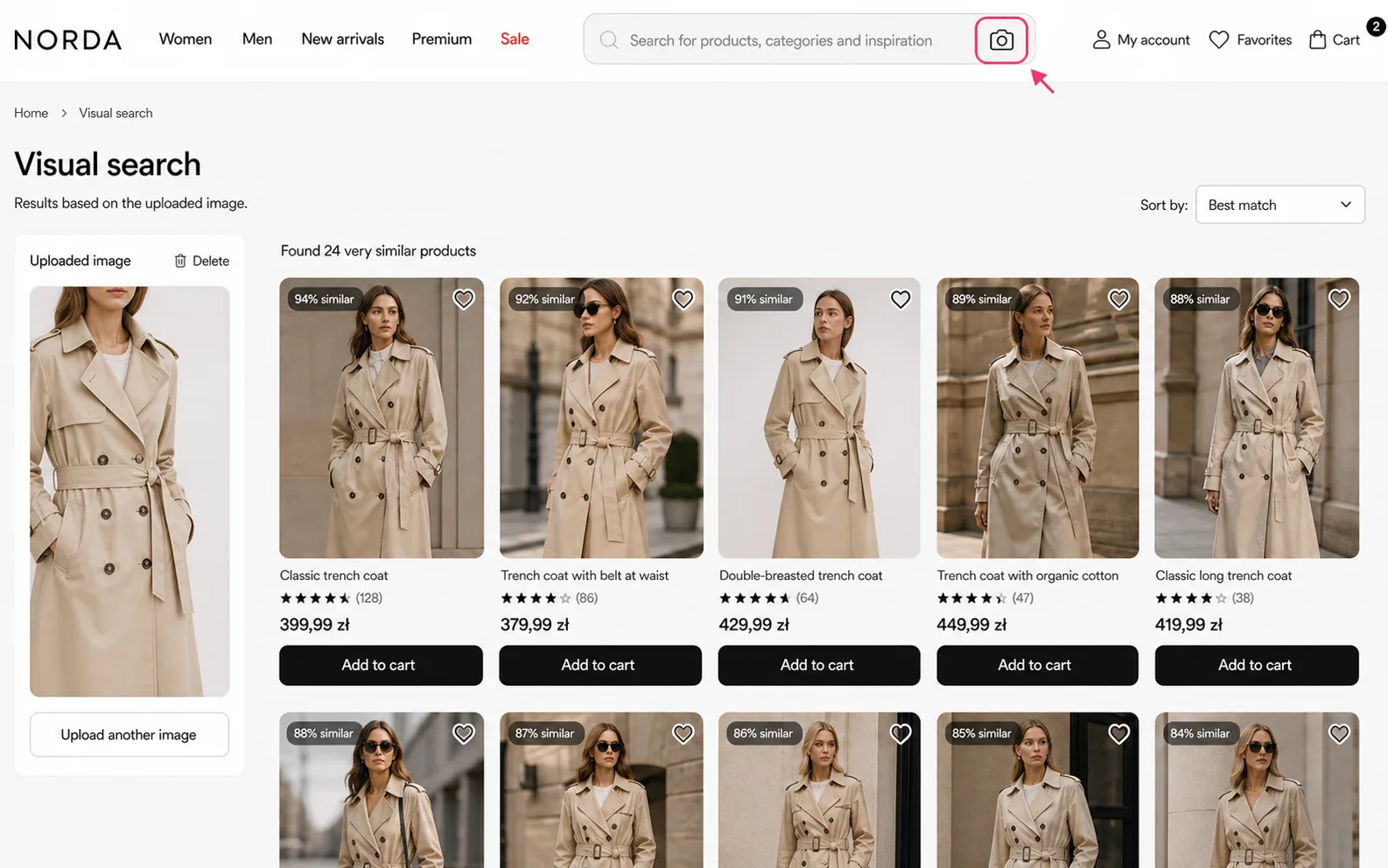
Visual search

Users can search for products by uploading a photo instead of typing a query.

The system analyzes the shapes, colors and textures of the image, then finds visually similar items in the catalog. This solution is especially valuable in industries such as fashion, interiors or DIY - the customer does not need to know the product's name or description to find it, and the store has a chance to reach someone who would otherwise give up the search.

Business value: reaching customers who do not know the product name, a competitive edge in fashion/interiors, higher conversion on mobile traffic

14

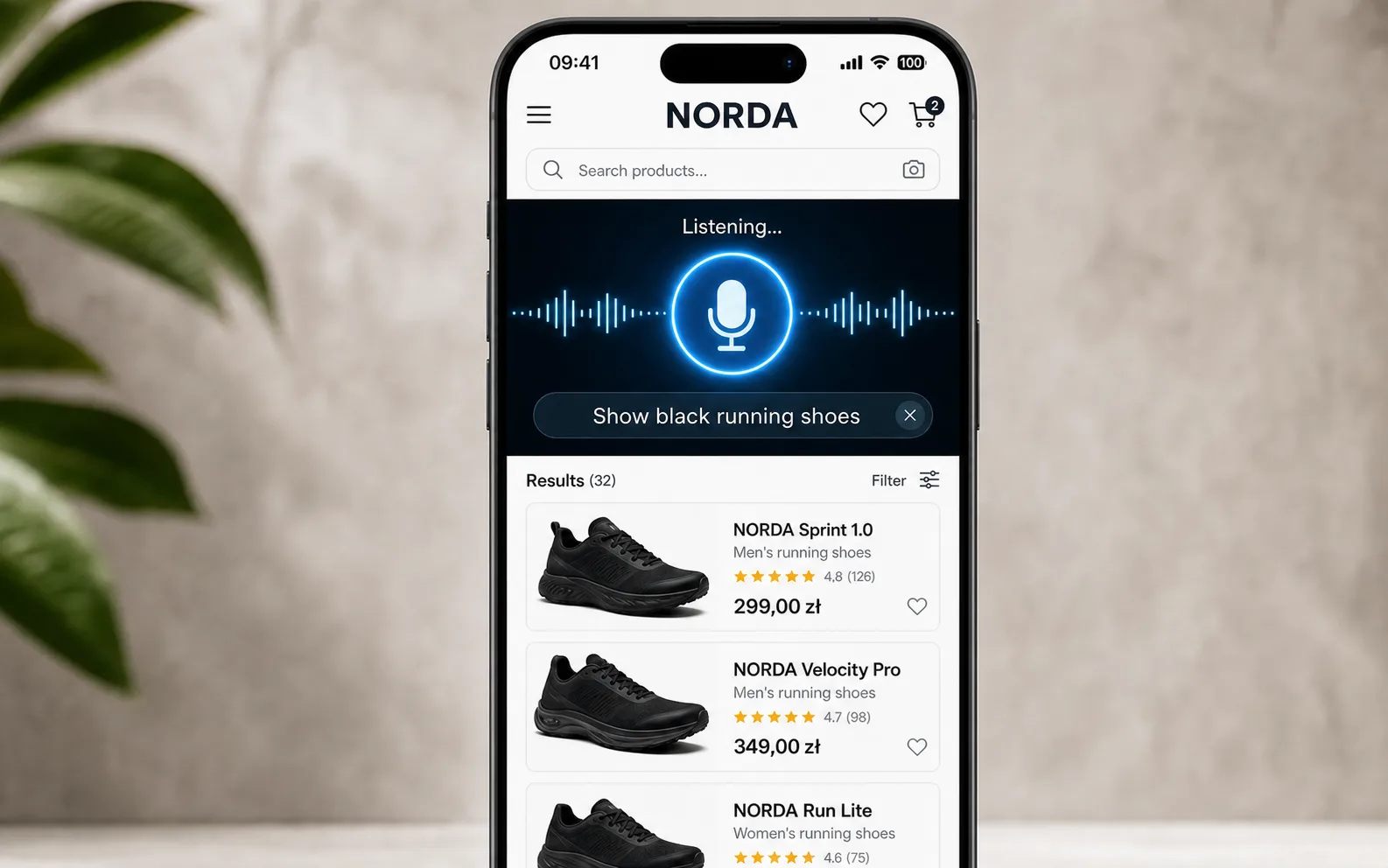
Voice search

Users can search for a product by speaking a query instead of typing it - especially convenient on mobile devices.

The system recognizes speech, interprets intent and returns relevant results, speeding up access to the product and lowering purchase friction. The feature increases store accessibility - useful on the go, for people with disabilities and for the growing group of customers who prefer conversational interactions (voice assistants).

Business value: lower purchase friction on mobile, broader store accessibility (including WCAG), readiness for the growing voice-assistant channel

15

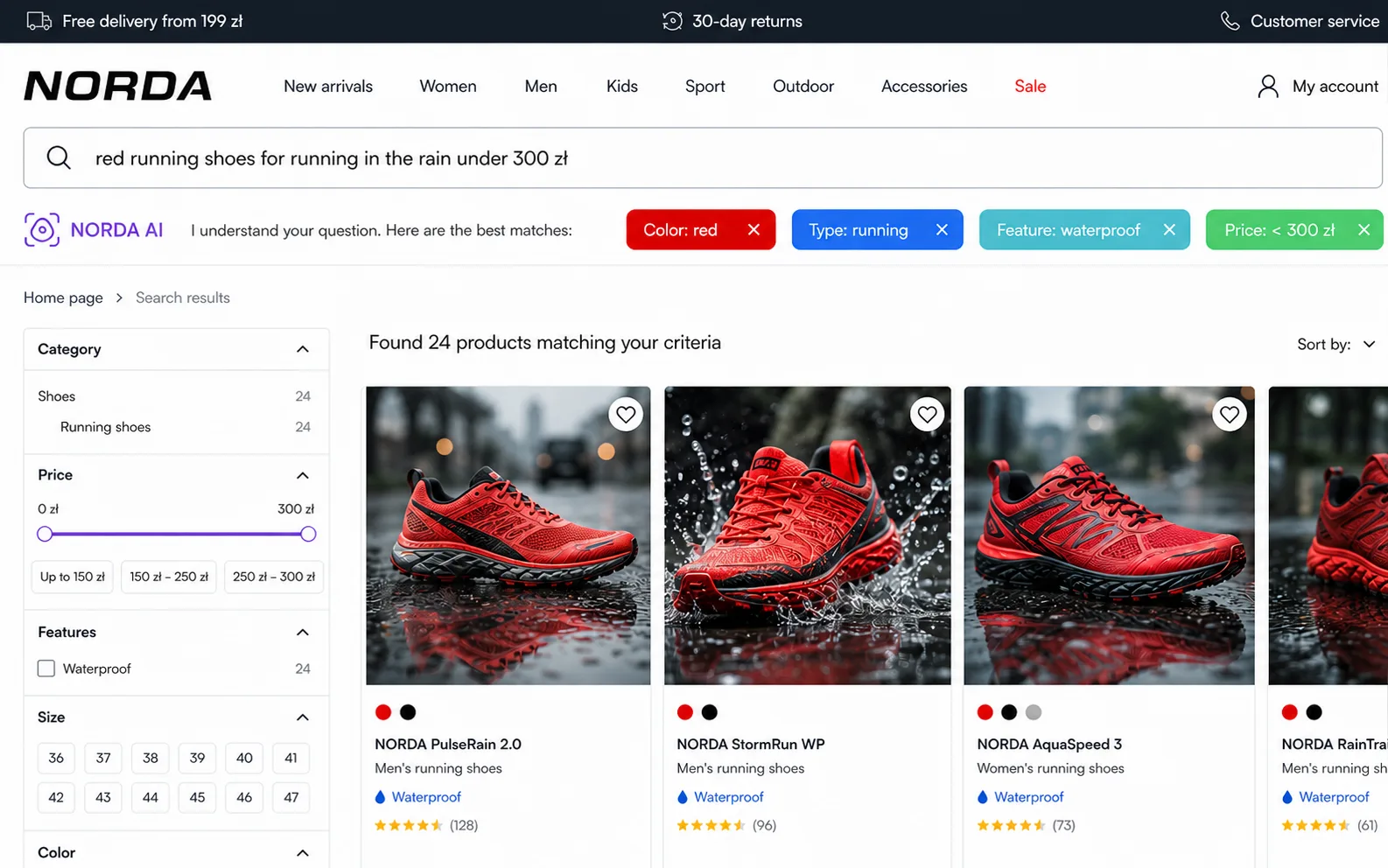
Natural language understanding

The search engine interprets queries in full sentences and colloquial language, just as a customer would ask a salesperson in a brick-and-mortar store.

Using natural language processing (NLP) and semantic search, it understands complex queries like “red sports shoes for running in the rain under 300 PLN” and returns results that account for all criteria at once. The customer gets more relevant results without learning query syntax, and the store gains an edge over competitors relying on classic keyword matching - especially for long and voice queries.

Business value: more relevant results on long-tail and voice queries, an edge over classic keyword search, higher conversion on complex queries

16

Product listing filtering

The same AI engine that powers search can also drive category pages and product listings - with personalized ordering, filters based on catalog attributes and merchandising rules.

On a category page, the customer sees products arranged according to their preferences and can narrow the selection in a few clicks, significantly shortening the purchase path. For the store, this means a consistent experience between search and the PLP, better use of category traffic and higher conversion on the most important catalog pages.

Business value: higher conversion on PLPs and categories, a consistent experience between search and listings, better use of category traffic

Blog

Latest articles

Knowledge and practical tips on Synerise, AI and personalization.

Tools June 21, 2026 Interactive calculators

E-commerce growth calculators: CLV, churn cost, loyalty program

Three free, interactive Persooa calculators: compute Customer Lifetime Value (CLV), the annual cost of churn and the ROI of a loyalty program for your e-commerce.

Read more
Knowledge June 20, 2026 11 min read

Synerise vs MarTech - how the platform differs from others on the market

A comparison of Synerise with the largest MarTech platforms. A proprietary foundation model trained on behavioral data, the TerrariumDB database, 31 billion events per month and 50 features you won't find at the competition.

Read more
E-COMMERCE

7 reasons for cart abandonment

An analysis of the 7 main causes of cart abandonment in e-commerce and concrete ways to eliminate them.

Read more
Get started

Let us talk about your growth.

Book a free call - we will analyze your situation and show where we can deliver measurable results fastest.