

Before a customer closes the tab, you have one more chance to keep them. The Exit Intent Popup seizes exactly that moment - displaying an offer or a reminder right before they leave, giving you the opportunity to recapture the user's attention and prompt them to act.
Table of contents
- 01 What is an Exit Intent Popup?
- 02 How does an Exit Intent Popup work?
- 03 What are the benefits of implementing an Exit Intent Popup?
- 04 Summary
01 What is an Exit Intent Popup?
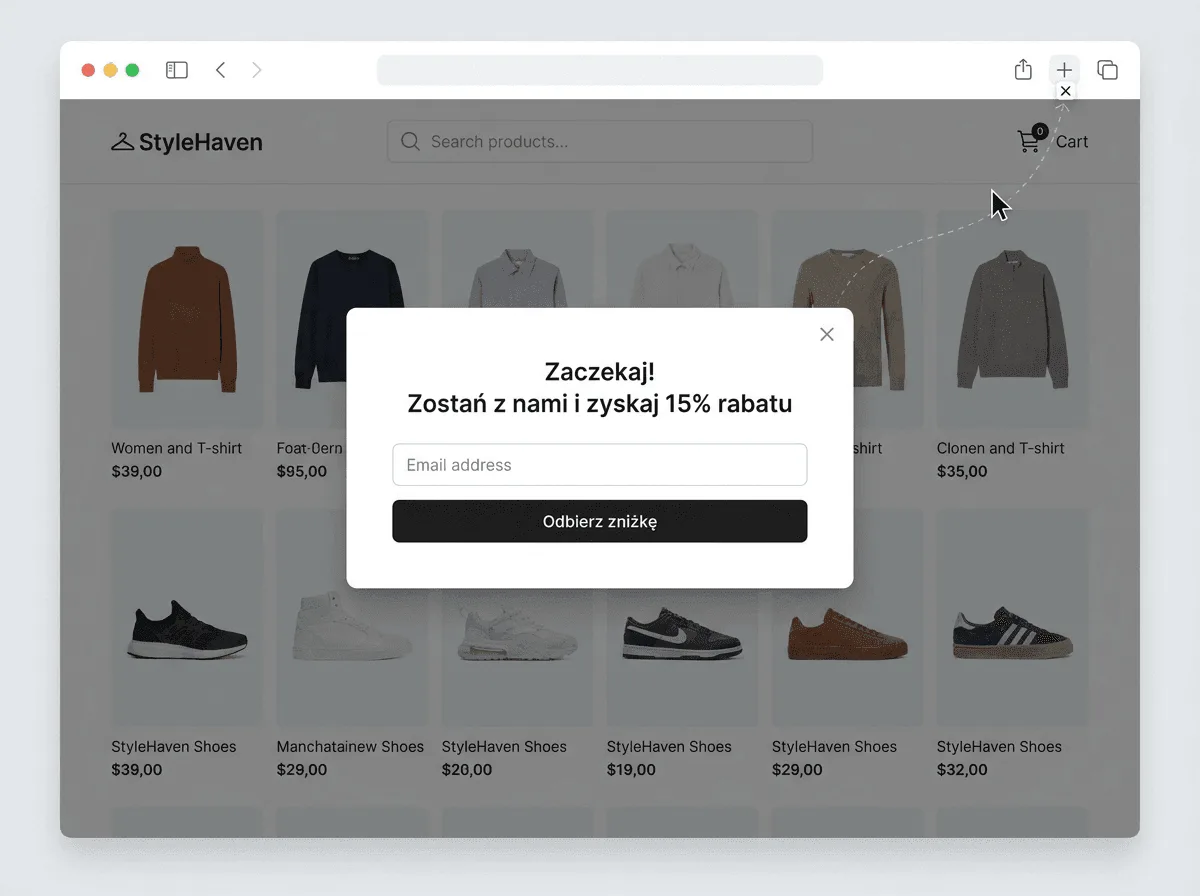
An Exit Intent Popup is a specific type of dialog box that is shown to users the moment their intent to leave a website or app is detected. This technology tracks the user's mouse movements, and when the cursor starts heading toward the "x" or the address bar, it interprets that as "exit intent." At that point a popup appears, designed to divert the user's attention and keep them on the page. It might be, for example, a special offer, a newsletter sign-up suggestion, an abandoned cart reminder, or other information that can encourage the user to keep interacting. Exit Intent Popups are often used in online marketing to increase user retention, boost sales conversion, or collect contact details.
02 How does an Exit Intent Popup work?
Exit Intent Popups work based on technology that tracks the user's cursor movements. When the algorithm detects that the cursor is moving toward the address bar, the "x," or another area typically associated with closing or leaving the page, it interprets this as "exit intent." At that moment a popup is triggered and appears on screen, trying to turn the user away from closing the page.
The dialog box can contain a variety of content, for example:
- a special offer, an incentive to sign up for the newsletter,
- an abandoned cart reminder,
- a question about why the user is leaving the page.
The goal of such a popup is to keep the user on the page and prompt them to take a specific action. This translates into higher conversion and user retention.
03 What are the benefits of implementing an Exit Intent Popup?
Using an Exit Intent Popup has many benefits that contribute to the overall effectiveness of a website's or app's marketing strategy. First and foremost, these dialog boxes help keep users on the page, increasing the chances of further interaction and potential conversions.
A second benefit is the ability to collect valuable data from users, such as email addresses for the newsletter or information gathered from a survey about why people leave the page. In this way, the Exit Intent Popup enables a better understanding of user behaviors and needs.
A third benefit is the ability to personalize the content. An Exit Intent Popup can be tailored to specific user groups or situations - for example, by offering special discounts to those who abandoned their shopping cart. This not only increases user engagement but also builds a positive brand experience.
An Exit Intent Popup can also be an effective tool for increasing sales, improving retention, and optimizing the user journey on the page.
Displaying an Exit Intent Popup leads to growth in:
- return-to-purchase conversion
- contextual conversion: newsletter sign-up
- call-to-call-center conversion
- loyalty program sign-up conversion
04 Summary
The Exit Intent Popup is a way to make use of the final moment before a customer leaves your page. The right message - a discount, an abandoned cart reminder, a newsletter sign-up request, or a question about why they're leaving - can keep a user around and recover a potentially lost conversion. The key is personalizing the popup content to the situation and audience, rather than showing everyone the same thing.