

A purchase is not the end of the relationship with a customer but the perfect moment to suggest something more. Well-chosen recommendations of complementary products can increase cart value and encourage further purchases, while genuinely helping the customer put together everything they need. In this article we show how to plan an effective post-purchase cross-selling scenario.
Table of contents
- 01 What does post-purchase cross-selling deliver?
- 02 Cross-selling - what is it?
- 03 What is a cross-sell scenario?
- 04 What should every cross-selling email contain?
- 05 Why can the cross-sell tactic be an important part of a larger sales strategy?
- 06 When should you send a cross-sell email?
- 07 How does cross-selling differ from up-selling?
- 08 Summary
01 What does post-purchase cross-selling deliver?
In this scenario, after a purchase is made, we want to send the user product recommendations based on the purchase history of other users. These will be the products most often chosen by people who made an identical or similar purchase.
This scenario contributes to:
- increasing the average order value;
- increasing purchase frequency;
- increasing revenue from active customers;
- increasing the number of units per transaction;
- in the case of active customers: driving a second purchase.
02 Cross-selling - what is it?
In e-commerce, cross-selling consists of suggesting add-ons based on the contents of a visitor's cart. Owners of e-commerce stores, however, have an advantage over brick-and-mortar stores! Cross-selling pop-ups and emails can reach a wider audience, be placed on the highest-traffic pages, and be seen by visitors even after they've left the site.
While cross-selling emails should be short and effective, there are elements without which it is hard to succeed in cross-selling. This article covers all the fundamentals of writing, timing, targeting, and testing messages meant to offer an additional product or service.
03 What is a cross-sell scenario?
A cross-sell scenario lets you suggest other products from your catalog based on what a visitor is currently browsing, has in their cart, or has already bought. These messages are one of the best ways to turn first-time buyers into loyal customers and to increase the average order value. Cross-selling emails can also make use of ads, which can be tied to data from a CDP system.
A cross-sell scenario can be sent automatically to contacts available in your database or at the checkout stage. Below is an example from Uniqlo. We see an attempt to cross-sell related items based on the information that the user is interested in specific products (they added them to favorites).
04 What should every cross-selling email contain?
The best cross-sell emails contain three things:
- they highlight the main product someone wants to buy;
- they offer at least two add-ons;
- they are part of a series of cross-sell emails, not just a single message.
The first part of a cross-sell message should remind visitors of what they were originally looking at. A CTA phrased in a simple way, such as "Buy now," which leads to completing the purchase in progress, can be helpful.
The second part of your cross-sell message is the most important if you want to increase cart value. Suggest items that are complementary to the original item.
A very important element of your cross-selling tactic is developing a series of messages. A single message is usually not enough to maximize the number of cross-sell conversions. That's why, using automation tools, you can set up a series of follow-ups that will use different communication channels and paths depending on the customer's specific actions or lack thereof.
05 Why can the cross-sell tactic be an important part of a larger sales strategy?
Cross-selling makes it easier for customers to discover new products that match their preferences. The best part of all this is that new products are presented to customers in a non-intrusive way. They aren't pushed items they don't care about. Instead, they're offered products personalized to their cart that might genuinely interest them.
Of course, cross-selling also lets you showcase more products from your warehouse, but do customers actually buy them? Data from McKinsey confirms the effectiveness of cross-selling. According to the data, online stores were able to increase their sales by as much as 20% by using cross-selling promotions on their websites and in owned channels such as email, SMS, or mobile push.
06 When should you send a cross-sell email?
There are three key occasions for sending cross-selling emails:
- after signing up for the newsletter
- in the post-purchase email
- in the abandoned cart email
Cross-selling after newsletter sign-up
Paige Collective's newsletter includes a gallery of products that subscribers are known to be interested in based on previous purchases or visits.
If you want to make even better use of cross-selling in your newsletter, you can include photos from social media featuring real customers. This is also called UGC, or user-generated content, which gives your brand more authenticity.
Cross-selling in post-purchase emails
Every time someone buys a product at Respoke Collection, a post-purchase email is sent that highlights who the product is intended for and informs them about additional products from the offer. Additionally, the email includes a discount code for 15% off.
Cross-selling in abandoned cart emails
You can use cross-selling tactics in your abandoned cart messages.
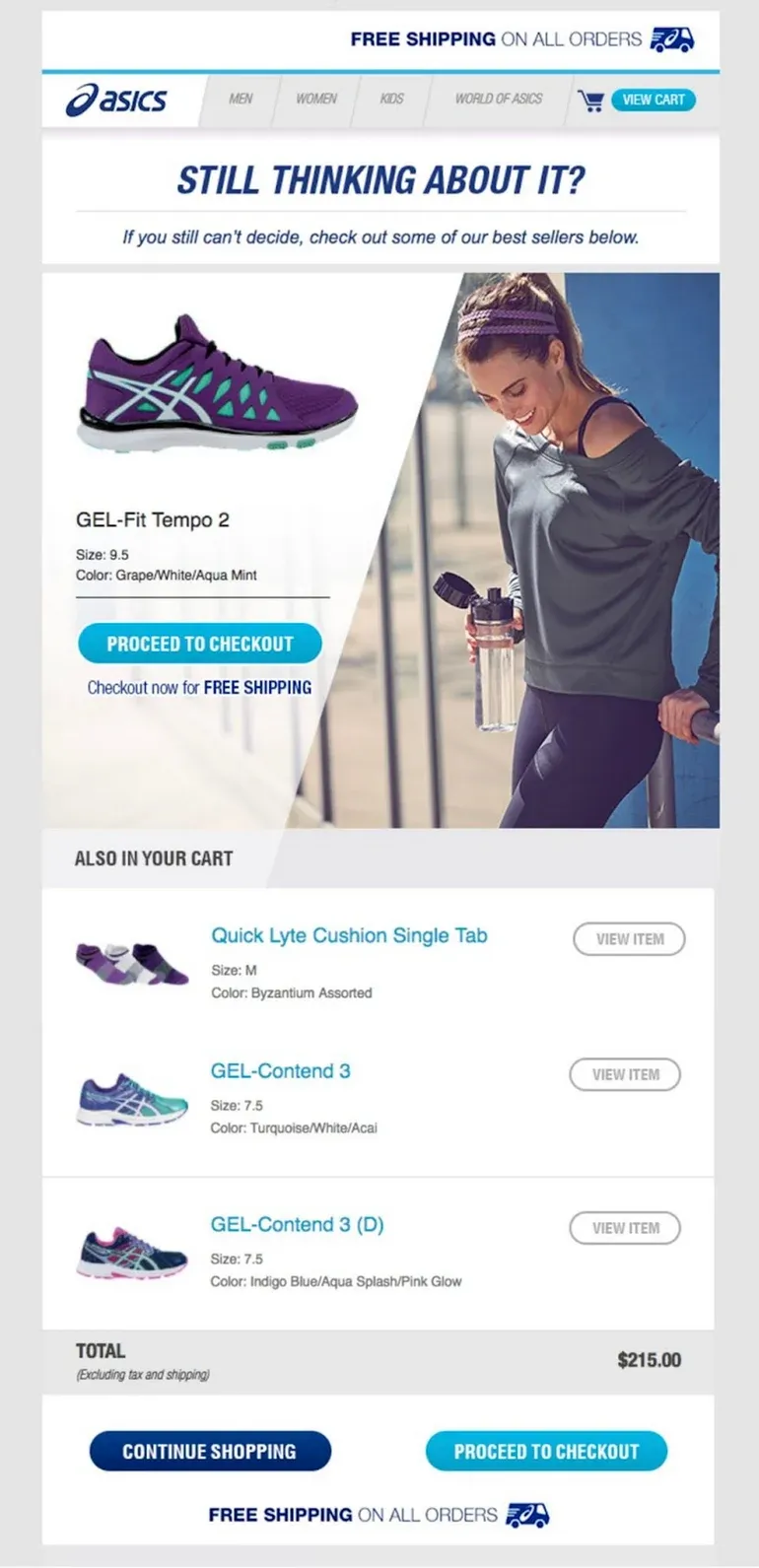
Use this opportunity to suggest products matched to what customers left in their cart. For example, if they left cat food in the cart, suggest cat toys or litter. You can also provide a discount code to encourage larger purchases, one that activates on a purchase above a certain amount.
Choose products that fit this customer's persona. If your customer previously bought cat-related products, offering them dog product recommendations probably won't be as effective as cat products.
07 How does cross-selling differ from up-selling?
Cross-selling differs from up-selling in that cross-selling offers the customer additional products or a product at a similar price. The goal of cross-selling is to increase cart value and long-term customer value. Up-selling offers the customer higher-priced products that have a better margin.
Combining cross-selling and up-selling can bring a significant increase in sales, which is why it's worth using both tactics at the same time.
08 Summary
Post-purchase cross-selling is an effective way to increase cart value and turn one-time buyers into loyal customers. The key is accurate, complementary recommendations based on purchase history, a clear CTA, and building cross-selling into a broader communication sequence (post-purchase, abandoned cart, newsletter). The best results come from combining cross-selling with up-selling, so it's worth using both tactics in parallel.