

In Poland, as many as 70% of companies declare that they use artificial intelligence. AI is a technology that promises higher efficiency, greater innovation and support in decision-making - a genuine revolution in how enterprises operate.
Yet reports on the maturity of the Polish market when it comes to AI indicate that only 1 in 3 companies genuinely tap into the potential of artificial intelligence. An even smaller percentage of enterprises have actually implemented it on a broad scale. This gap between declarations and reality shows how many Polish organizations stand on the threshold of the AI revolution but do not know how to carry it out effectively. This is your chance to leave that competition far behind.
Table of contents
- 01 How to build an AI strategy in your company?
- 02 How to prepare data and infrastructure for AI?
- 03 How to develop AI competencies in your company?
- 04 How to implement AI gradually across the organization?
- 05 Why is it worth implementing AI in your company?
01 How to build an AI strategy in your company?
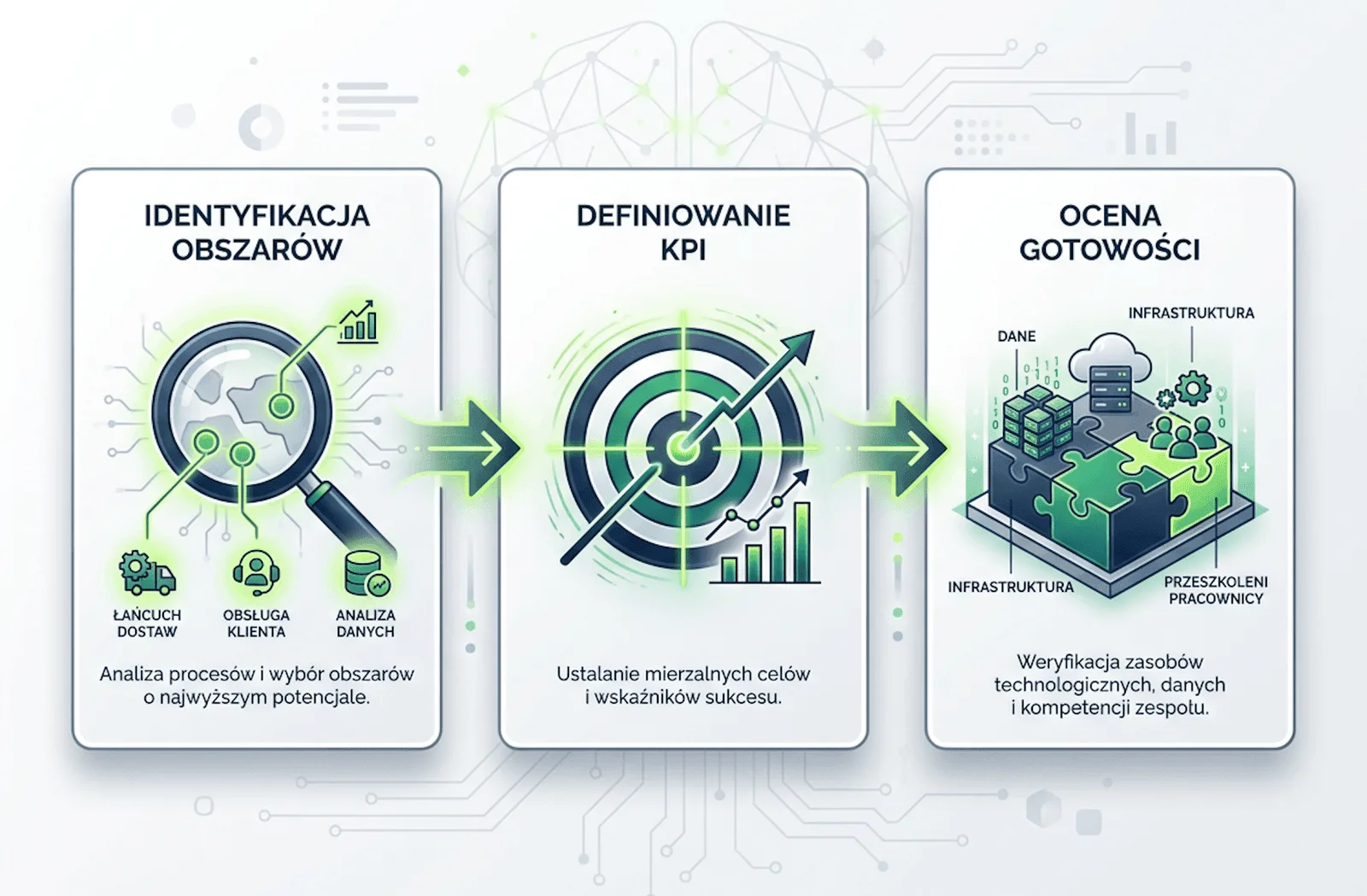
Developing a clear strategy that defines how AI will support your business goals lets you bring order to the entire process. Artificial intelligence should be implemented as a response to specific problems or to seize new opportunities, not simply because it is a trendy topic. It is worth starting with:
- Identifying areas: Determining the tasks where AI can bring the greatest benefits lets you focus your efforts on the most important parts of the business (e.g. supply chain optimization, customer service automation, or data analysis)
- Defining KPIs: To measure the success of an AI implementation effectively, you need to define performance indicators (KPIs). Clear criteria and time frames will let you monitor the process and verify whether the investment in AI is actually delivering the intended results.
- Assessing readiness: A company must have the right resources to implement AI. This concerns both data availability and the right infrastructure, as well as employee training. Without these elements, AI will not be able to deliver the expected results and will remain untapped potential.
Read also: Using AI in business: Optimization, personalization and automation with artificial intelligence
02 How to prepare data and infrastructure for AI?
Data as fuel for AI
It is information that powers algorithms. To work effectively, AI will require complete, consistent and high-quality data about your company. It should first be cleansed of duplicates and inconsistencies - otherwise the artificial intelligence will learn from mistakes and then most likely replicate them. Standardizing data formats is fundamental. It is worth using data integration systems that organize, enrich and activate resources, ensuring easy access to the information you need.
Technology infrastructure for implementing AI in your business
Modern solutions, such as machine learning and deep learning, may require modernizing your existing IT infrastructure. Such technologies usually need considerable computing power. This problem, however, is solved by cloud services, which use external servers**** and are also cost-effective.
The security of your data
When implementing AI, you also need to take care of appropriate security protocols. Collecting data about the company and its customers requires particular attention to privacy protection and information security - including while this data is being processed by artificial intelligence.
03 How to develop AI competencies in your company?
People are the heart of every organization, and their engagement and skills are what guarantee the success of implementing any new tool, artificial intelligence included. Support your employees through this process by focusing on:
- Training and reskilling: Invest in your employees - they must be well prepared for the changes and opportunities that AI brings. Knowing how to use the new tools and how AI will affect their daily work will help fully harness the potential of this technology. We recommend our Marketing Automation 2.0 courses and certified training in Synerise solutions.
- Building AI teams: To implement artificial intelligence effectively, it is worth considering hiring specialists or team augmentation solutions in the areas of AI, data science and data engineering. An in-house AI team may prove indispensable, especially for more advanced implementations.
Discover the range of services our team of experts can support you with: Managed services in marketing and loyalty automation
- A culture of innovation: Implementing AI requires creating an organizational culture that is open to experimentation, learning and innovation. Artificial intelligence should not replace employees, but support them in their daily work, increasing their efficiency.
- Transparent communication: An important element in the AI implementation process is clear and open communication with employees about the project's goals and its impact on the organization. Such transparency helps dispel concerns and build team engagement, which increases the chances of a successful implementation.
04 How to implement AI gradually across the organization?
Artificial intelligence is a tool meant to improve a company's processes, not to revolutionize the entire company. Implementing AI should be a gradual transformation, starting with small but strategic pilot projects. These let a company test tools in practice and assess their effectiveness and usefulness without the risk of incurring high costs.
Once a successful pilot is complete, the next step is gradually extending the use of AI to other areas of the company. Drawing on the experience from the first project, you can effectively scale these solutions, adapting the tools to the organization's processes and needs.
05 Why is it worth implementing AI in your company?
Implementing artificial intelligence in your company can give you an edge over the competition by enabling process automation, advanced service personalization and cost optimization.
Practical solutions such as chatbots, personalized recommendations and automated customer service can significantly improve customer satisfaction and strengthen the company's position in the market. Artificial intelligence is the foundation of the future for any business that cares about higher efficiency, greater innovation and stronger competitiveness. Is your company ready for this step?