

More and more online stores and companies face the need to familiarize themselves with the guidelines of the Omnibus Directive 2022. When and where do they start to apply? What do they focus on and who were they designed for?
Table of contents
- 01 The Omnibus Directive - what do you need to know about it?
- 02 What does the Omnibus Directive focus on?
- 03 Who is affected by the provisions of the Omnibus Directive?
- 04 What changes does the Omnibus Directive introduce?
- 05 What penalties apply for failing to comply with the Omnibus Directive?
- 06 Summary - the e-commerce market in Poland
01 The Omnibus Directive - what do you need to know about it?
The Omnibus Directive 2022, that is the Directive of the European Parliament and of the Council of 11 April 2018, also known as the "new deal for consumers", is a new set of EU guidelines. They were created in order to strengthen the protection of consumers and businesses against unfair business practices in e-commerce. Its main goal is to provide customers with the information necessary to make an informed purchasing decision.
02 What does the Omnibus Directive focus on?
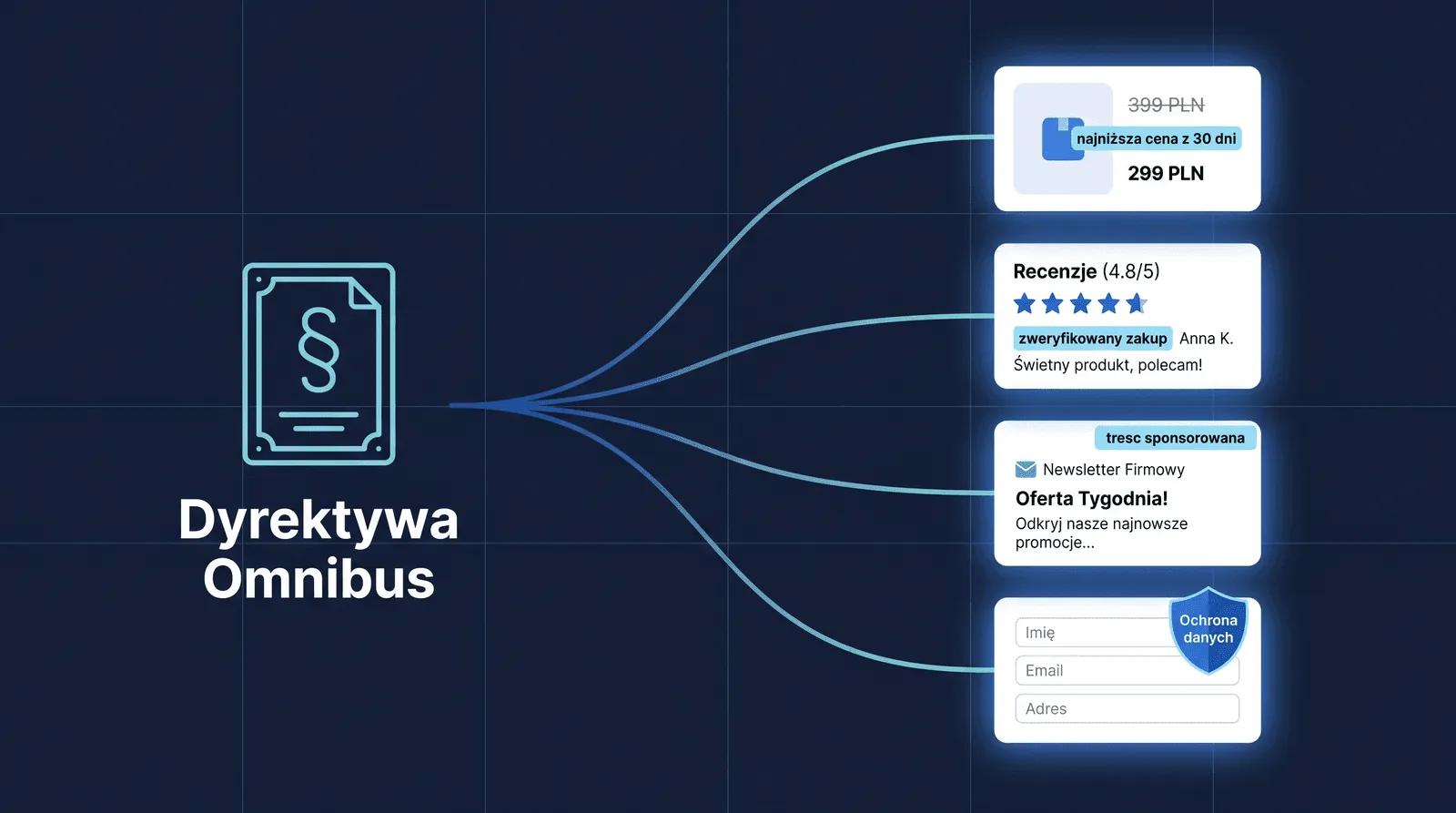
The content of the Omnibus Directive focuses mainly on:
- sanctions for failing to comply with the adopted rules,
- concluding contracts online and the right to withdraw from a contract,
- obligations for trading platforms,
- direct marketing communication,
- price transparency,
- the authenticity of product reviews,
- the dual quality of products in different markets.
03 Who is affected by the provisions of the Omnibus Directive?
The new regulations are intended to apply to all parties involved in online sales, as well as the owners of online stores and the agencies that help them achieve their business goals. The guidelines should be implemented by all entities operating within the European Union.
04 What changes does the Omnibus Directive introduce?
Price visibility on product cards
One of the most important directions is price visibility on product cards. According to the new regulations, in every case of a price reduction, alongside the new value you must also provide the customer with the lowest price in 30 days that applied in the period before the discount was introduced.
Informing about automated personalization
Another important aspect is the obligation to inform the consumer about personalized price adjustment for a product/service based on their past behavior, site traffic, and purchasing preferences.
Marketing automation and marketing consents
In connection with certain marketing automation activities, the user's consent is required. It is worth recalling the GDPR regulation, which speaks of the necessity of obtaining the customer's consent to be contacted in advance, before personal data is used for marketing purposes.
Transparent and reliable product reviews
As many as 3/4 of consumers pay attention to product reviews before making a purchasing decision. Removing or hiding reviews, as well as publishing fake recommendations, will be unlawful.
05 What penalties apply for failing to comply with the Omnibus Directive?
Failure to comply with the implementation of the Omnibus Directive's recommendations carries high penalties. Among others: PLN 20,000 for failing to inform about a reduced price, or PLN 40,000 for failing to comply with the regulations three times within a year.
06 Summary - the e-commerce market in Poland
Post-covid e-commerce is still enjoying its boom. It is worth keeping up to date with and implementing the basic legal issues covering e-commerce, including the guidelines resulting from the Omnibus Directive.